
 brainynbrightusa


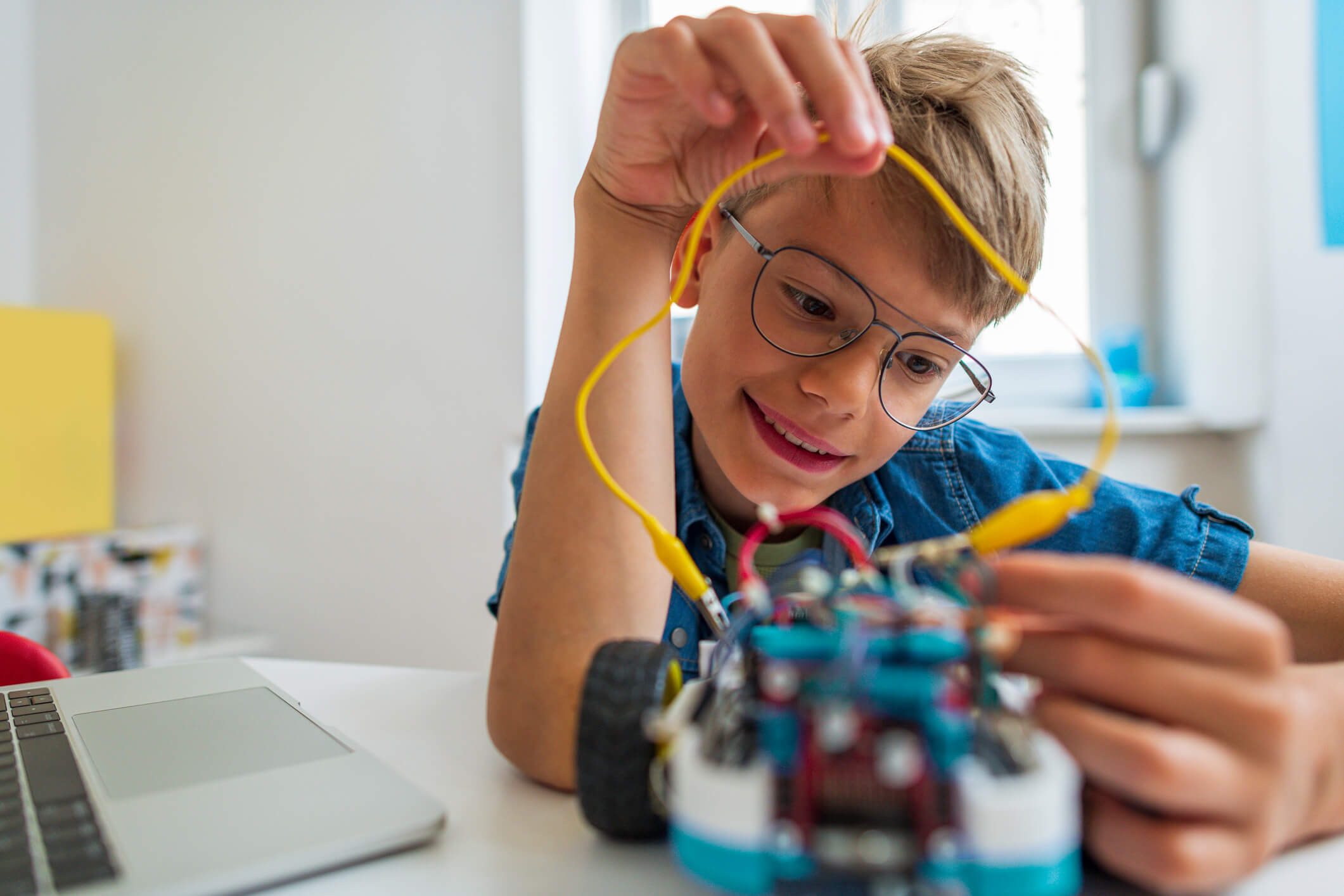
Choosing the right robotics program for your child can feel surprisingly difficult. There are so many options, from short holiday camps and after-school programs to long-term technology courses, that parents often wonder which one will actually help their child learn and grow.
Robotics courses for kids can introduce children to engineering, coding, electronics, automation, mathematics, and problem-solving through practical projects. Instead of only reading about technology, children get opportunities to build something, test it, make mistakes, and improve it.
If you are searching for robotics classes near me, looking for robotics courses camp New Jersey, or comparing a robotics course in New Jersey, this guide will help you understand what to look for before enrolling your child.
Why Robotics Is an Excellent Learning Opportunity for Kids
Robotics combines several areas of STEM education into one hands-on experience. A child may learn how sensors work in one project, practice programming in another, and then use creative thinking to solve a mechanical problem.
This makes robotics different from many traditional learning experiences. Children are not simply memorizing information; they are using knowledge to create something that works in the real world.
Robotics Encourages Hands-On Learning
Children naturally enjoy experimenting. When they build a robot and see it move because of something they programmed, abstract concepts suddenly become easier to understand.
That practical connection can make learning more memorable. Even when a project does not work on the first attempt, children have an opportunity to identify the problem, change their approach, and try again.
Robotics Builds Problem-Solving Skills
What happens when a robot turns in the wrong direction? What if a sensor does not detect an object? What if the code produces an unexpected result?
These small challenges encourage children to think logically. They learn that a problem is not necessarily a failure; it can be the starting point for finding a better solution.
Understand Your Child’s Age and Skill Level
One of the first things parents should consider is whether a robotics course matches the child’s age and existing knowledge. A program designed for beginners may be ideal for a seven-year-old but too basic for an experienced teenager.
The right level should challenge your child without making the learning experience frustrating. Ask the training provider about age groups, prerequisites, project difficulty, and progression before enrolling.
Beginner Robotics Programs
Beginner programs usually introduce children to fundamental concepts such as simple mechanisms, basic electronics, sensors, block-based programming, and introductory robotics projects.
For younger learners, visual programming and simple building activities can provide an approachable introduction to technology. The goal at this stage should be curiosity and confidence rather than overwhelming technical complexity.
Intermediate and Advanced Robotics Programs
Older or experienced students can explore more advanced programming, sensors, motors, automation, electronics, engineering concepts, and increasingly complex projects.
A good program should allow children to progress rather than repeating the same introductory activities indefinitely. Look for a curriculum where skills develop from one level to the next.
Look at the Robotics Course Curriculum Carefully
The curriculum tells you what your child will actually learn. A colorful website and impressive course name are not enough; parents should examine the educational content behind the program.
A strong curriculum should combine concepts with practical application. Instead of spending every session following instructions, children should have opportunities to make decisions and solve challenges independently.
Check the Programming Component
Programming is an important part of modern robotics education. Depending on age and level, children may work with visual coding, Python, or other programming environments.
Ask whether coding is taught as a meaningful part of the robotics experience or simply mentioned in the course description. Ideally, students should understand how their code affects the robot’s behavior.
Check Hardware and Engineering Activities
Robotics is more than programming. Children should also understand how physical components work together.
Look for courses that include motors, sensors, controllers, mechanical structures, circuits, or robotics kits appropriate for the child’s age. Building and programming together creates a more complete STEM learning experience.
Consider Project-Based Robotics Learning
A project-based approach can make robotics much more engaging. Instead of learning isolated concepts, children can apply several skills while creating a working project.
For example, a student might build an obstacle-avoiding robot. To complete it, they may need to understand sensors, motors, programming logic, movement, and testing.
Why Projects Matter
Projects give children something tangible to work toward. They can see the result of their effort instead of simply completing worksheets or watching demonstrations.
Projects also create natural opportunities for experimentation. A child can modify the design, change the code, test a different idea, and discover what happens.
Evaluate the Teaching Method
The instructor can make a major difference in a child’s robotics experience. Even an excellent curriculum may not work well if students receive little guidance or are expected to simply copy instructions.
Ask how instructors teach, how they support beginners, and how they handle students who progress at different speeds.
Small Groups Can Improve Participation
Smaller groups can make it easier for instructors to observe individual students and provide support when needed. Children also get more opportunities to ask questions and participate actively.
When comparing a robotics courses center for kids in New Jersey, consider not only the number of students but also the instructor-to-student ratio and the structure of each session.
Look for Mentorship, Not Just Instruction
Good robotics education is not simply about telling children which button to press. Teachers should encourage students to think about why something works and what they could change.
That mentoring approach can help children become independent problem-solvers rather than learners who always wait for an answer.
Compare Robotics Courses Camp New Jersey Options
A robotics courses camp New Jersey program can be an excellent option during school breaks. Camps can give children concentrated exposure to robotics while keeping the experience active and social.
However, parents should check whether the camp focuses primarily on entertainment or provides structured educational outcomes.
What to Look for in a Robotics Camp
Look for a camp that includes hands-on projects, age-appropriate instruction, experienced mentors, teamwork, coding, engineering challenges, and opportunities to complete meaningful projects.
It is also useful to ask how much time children spend actually building and programming compared with demonstrations or passive activities.
How to Find a Robotics Course in New Jersey
If you are searching for a robotics course in New Jersey, start by identifying the type of experience you want. You might be looking for an after-school program, weekend class, summer camp, online course, or long-term STEM program.
Location matters, but it should not be the only factor. A nearby program that does not match your child’s age or interests may be less suitable than a slightly farther program with a stronger curriculum.
Search for Robotics Classes Near Me
The phrase robotics classes near me is a useful starting point, but search results should be treated as a shortlist rather than an automatic recommendation.
Compare course descriptions, age groups, schedules, teaching methods, project examples, instructor experience, and parent information before making a decision.
Evaluate the Robotics Training Center
A quality robotic training center for kids in NJ should provide a learning environment where children can experiment safely and confidently.
Parents can ask whether the center has dedicated robotics equipment, appropriate workspaces, structured lesson plans, and practical projects. The physical environment can influence how comfortably children engage with hands-on learning.
Ask About Equipment and Technology
Robotics equipment can vary significantly between programs. Some centers may use simple beginner kits, while others may introduce students to more advanced platforms and components.
The important question is not whether the equipment looks expensive. Instead, ask whether the available technology supports the learning objectives and allows children to actively build and experiment.
Consider Online Versus In-Person Robotics Classes
Both online and classroom robotics programs can offer useful learning experiences. Your choice should depend on your child’s learning style, schedule, access to equipment, and preferred level of interaction.
In-person programs can provide direct access to equipment and face-to-face teamwork. Online programs can offer flexibility and may be useful for families with busy schedules or limited access to local centers.
When In-Person Learning Can Help
Children who enjoy physical building and group activities may appreciate an in-person environment. They can interact directly with instructors, collaborate with classmates, and work with physical robotics equipment.
For families looking for a local robotics training center for kids in NJ, classroom programs can also provide a structured weekly learning routine.
Check the Experience of the Instructors
Before choosing one of the best robotics courses for kids, investigate who will actually teach the students.
Look for instructors who understand both robotics and child-focused education. Technical knowledge is valuable, but the ability to explain complicated concepts in an age-appropriate way is equally important.
Ask How Instructors Handle Mistakes
Robotics involves plenty of trial and error. A robot may fail to move, a program may contain a bug, or a mechanical component may not behave as expected.
An effective instructor should turn these situations into learning opportunities instead of simply fixing everything for the student.
Look for Creativity Alongside Technical Skills
Robotics should not become an exercise where every child builds exactly the same thing in exactly the same way.
The best robotics training institute for kids should create opportunities for creativity. Students should be encouraged to modify projects, suggest solutions, design their own ideas, and experiment with different approaches.
Creativity is particularly valuable because real engineering rarely involves following one perfect set of instructions. Engineers constantly evaluate alternatives and improve designs.
Consider Collaboration and Teamwork
Robotics can teach valuable teamwork skills. Many real-world engineering projects involve people working together, sharing ideas, dividing responsibilities, and solving problems collectively.
A strong children’s robotics program can recreate some of that experience in an age-appropriate way.
Team-Based Challenges
Team challenges can teach children how to communicate and listen to others. They also help students understand that different approaches can contribute to solving the same problem.
These experiences can support communication and leadership skills alongside technical learning.
Ask About Progress Tracking
Parents should know how the program measures student development. A robotics course should ideally have some way of tracking what students have learned and what skills they are developing.
This does not necessarily mean traditional exams. Project completion, coding challenges, practical demonstrations, portfolios, and instructor feedback can all provide useful information.
Project Portfolios Can Be Valuable
A project portfolio gives children something tangible to show their progress. It can include completed robotics projects, coding exercises, photographs, documentation, or explanations of how a particular project works.
More importantly, portfolios can help children recognize how much they have learned over time.
Consider Brainy n Bright for Robotics and STEM Learning
For families looking for a structured STEM learning experience, provides robotics and technology-focused education designed to help children develop practical skills through engaging learning activities.
Brainy n Bright focuses on areas such as robotics, coding, artificial intelligence, STEM, and other technology-oriented subjects. Its approach is designed to connect technical learning with creativity, experimentation, and problem-solving.
For parents comparing options for a robotics course in New Jersey, Brainy n Bright can be considered as a STEM and robotics training option for children who want to explore technology through practical learning.
Why Parents Can Explore Brainy n Bright
A children’s robotics program should help students do more than assemble components. The learning experience should encourage them to understand how systems work, experiment with ideas, and develop confidence while solving challenges.
Brainy n Bright aims to create that type of learning environment by combining STEM concepts with hands-on educational activities. Families can explore its programs to determine whether the curriculum, age group, schedule, and learning format fit their child’s needs.
What Makes a Robotics Program a Strong STEM Experience?
Robotics naturally connects multiple STEM disciplines. Children can encounter engineering when designing structures, mathematics when calculating movement, computer science when writing code, and science when investigating how sensors and systems behave.
That combination makes robotics a useful way to introduce children to broader technology concepts.
Robotics Can Prepare Kids for Future Technology
Technology continues to influence education, business, transportation, healthcare, manufacturing, and countless other industries. Early exposure does not mean every child needs to become an engineer.
Instead, robotics can help children develop a comfortable relationship with technology. They learn how to ask questions, experiment, understand systems, and approach unfamiliar problems logically.
Compare Course Duration and Schedule
A good robotics program also needs to fit your family’s schedule. Some children benefit from short camps, while others enjoy a weekly program that gradually develops their skills.
Think about your child’s availability and attention span before choosing a format. Consistency can be particularly useful when learning programming and robotics because each lesson can build upon previous knowledge.
Short Camps vs Long-Term Programs
A camp can provide an exciting introduction to robotics and may be ideal for children who want to explore the subject before making a longer commitment.
Long-term programs, on the other hand, can provide more time for children to progress from basic concepts to increasingly sophisticated projects. Neither format is automatically right for every child; the best choice depends on the child’s goals.
Understand the Total Cost Before Enrolling
Price is naturally an important consideration, but parents should compare what is included rather than looking only at the headline fee.
Ask whether equipment, learning materials, project kits, certificates, assessments, and instructor support are included. A lower-cost course may not offer the same resources as a more comprehensive program.
The goal is to understand the overall learning value rather than choosing solely based on price.
Ask About Safety and Classroom Practices
Robotics involves physical components, electronic equipment, wires, motors, and tools. Children should be taught how to use equipment responsibly.
Parents should ask about supervision, classroom safety procedures, age-appropriate equipment, and how instructors manage practical activities.
A well-organized learning environment allows children to experiment while maintaining appropriate safety standards.
How Parents Can Help Kids Get More From Robotics Courses
Enrolling your child is only the beginning. You can make the experience more valuable by showing interest in what they are learning.
Ask questions such as, “What did your robot do today?” or “What problem did you solve?” These questions encourage children to explain their thinking instead of simply saying whether they completed the assignment.
Encourage Curiosity at Home
You do not need an expensive home laboratory to encourage robotics interest. Children can explore simple programming concepts, watch engineering demonstrations, sketch robot ideas, or discuss how everyday automated systems work.
The key is to keep technology learning enjoyable rather than turning every activity into another academic obligation.
Common Mistakes Parents Should Avoid
One common mistake is choosing a course simply because it has an impressive title. Another is selecting a program solely because it is close to home.
Parents should also avoid assuming that the most expensive program is automatically the best choice. Curriculum quality, instructor support, project-based learning, equipment, student engagement, and age suitability all deserve consideration.
Most importantly, listen to your child. A program may look excellent on paper, but your child’s curiosity and enjoyment are important parts of successful learning.
A Simple Checklist for Choosing Robotics Courses for Kids
Before enrolling, ask yourself a few practical questions. Does the program match my child’s age and current skill level? Does it provide hands-on projects? Are coding and engineering both included?
Also check the instructor experience, class size, equipment, schedule, learning format, safety practices, progress tracking, and total cost.
If you are comparing a robotics courses center for kids in New Jersey, this checklist can make the decision much easier because you can evaluate different programs using the same criteria.
Why Brainy n Bright Can Be on Your Shortlist
When parents search for a robotics training center for kids in NJ, they are usually looking for more than a place where children can build robots. They want an educational environment that develops curiosity, confidence, technical understanding, and problem-solving ability.
Brainy n Bright positions its STEM education around technology-focused learning for children, including robotics and coding. Families in New Jersey can explore its available programs and determine whether its approach matches their child’s age, interests, learning goals, and schedule.
For parents specifically seeking a robotics training center for kids in NJ, Brainy n Bright can be explored as a dedicated STEM learning option that brings robotics and technology concepts into an engaging educational environment.
Conclusion
Choosing the right robotics courses for kids is ultimately about finding the right balance between education, practical experience, creativity, and enjoyment. A good program should meet your child at their current level while giving them room to grow.
Whether you are comparing robotics classes near me, researching robotics courses camp New Jersey, or searching for a robotics course in New Jersey, look beyond advertisements and course names. Examine the curriculum, instructors, projects, equipment, class size, learning format, safety practices, and progression opportunities.
For families exploring STEM education in New Jersey, Brainy n Bright is one option to consider when looking for robotics and technology-focused learning for children. The right program can turn a child’s natural curiosity into practical skills—and perhaps that first little robot they build today could become the beginning of a much bigger interest in technology tomorrow.
Frequently Asked Questions About Robotics Courses for Kids
1. What age is suitable for robotics courses for kids?
Many robotics programs introduce children to robotics from around elementary-school age, with the difficulty increasing as students get older. The ideal starting point depends on the child’s interest, learning ability, and the course curriculum.
2. How do I find robotics classes near me in New Jersey?
You can search for robotics classes near me and then compare nearby programs based on age groups, curriculum, instructor experience, hands-on projects, class size, equipment, schedules, and reviews. Do not choose solely based on distance.
3. What should I look for in a robotics course in New Jersey?
Look for an age-appropriate curriculum that combines robotics, programming, engineering, practical projects, problem-solving, and creativity. Instructor quality, equipment, safety, class size, and opportunities for progression are also important.
4. Is Brainy n Bright a robotics training center for kids in NJ?
Brainy n Bright offers STEM and technology-focused educational programs, including robotics and coding. Parents interested in its New Jersey offerings should review the current program details, age requirements, schedule, and learning format to determine suitability.
5. Are robotics courses useful for a child’s future?
Robotics can help children develop problem-solving, computational thinking, creativity, teamwork, programming, and engineering-related skills. These abilities can be useful across many technology and STEM fields, even if a child eventually chooses a completely different career path.