
 brainynbrightindia


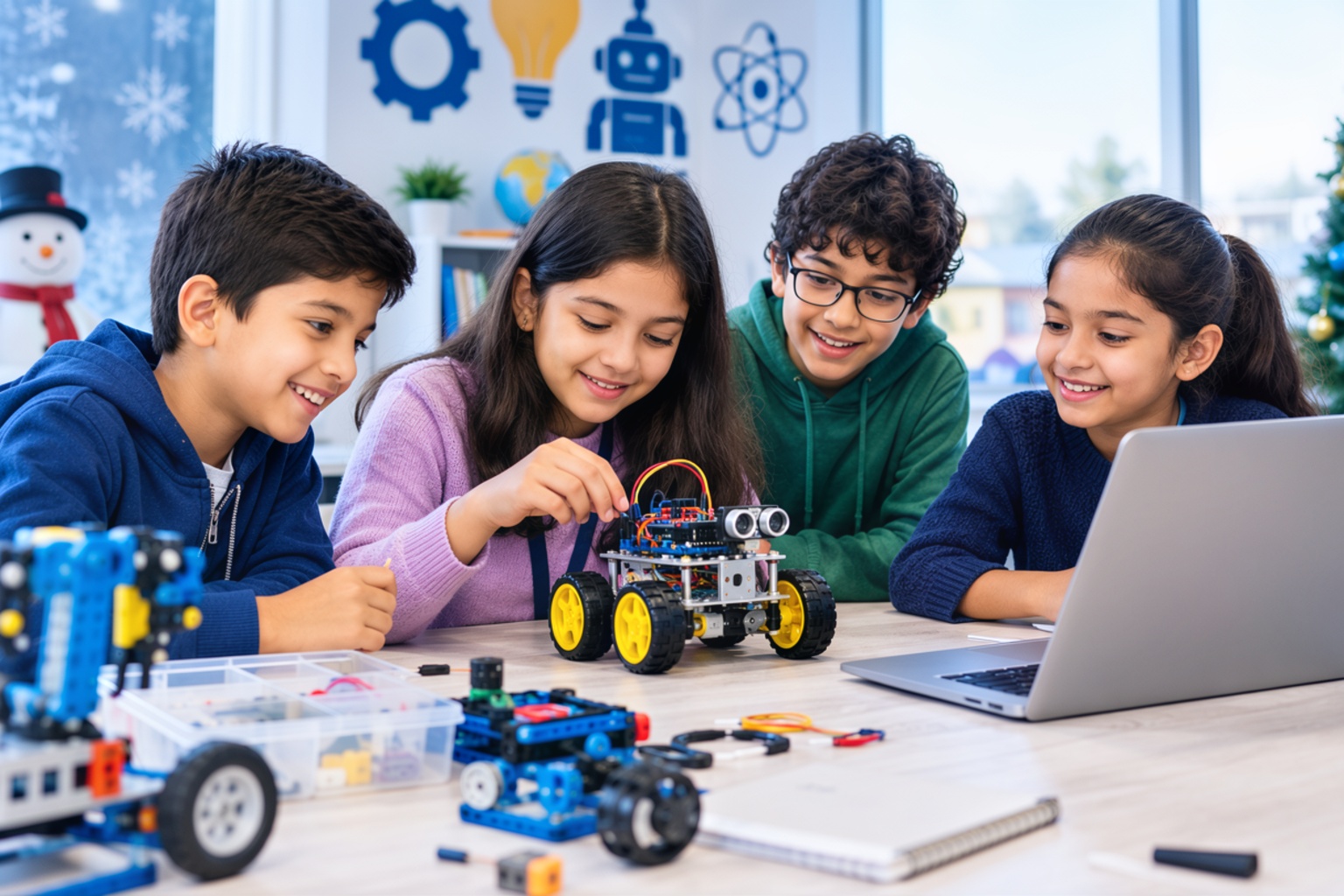 Winter break can be one of the most exciting times of the year for children. School is out, the weather is comfortable, and there is finally enough time for kids to explore interests that may not fit into their regular school schedule. But how can parents make sure this break becomes more than just a few weeks of screen time and indoor entertainment?
A well-planned winter camp for kids Bangalore can turn the holiday season into an experience filled with learning, creativity, friendship, experimentation, and fun. Instead of simply keeping children occupied, the right camp can help them discover what they enjoy while developing practical skills that stay useful long after the winter holidays are over.
For parents, choosing the right program is about finding the balance between education and enjoyment. Children should feel excited to attend camp, not as though they are simply attending another classroom. This is where STEM-focused programs, robotics, coding, artificial intelligence, creative technology, and hands-on projects can make a real difference.
Brainy n Bright is a STEM and robotics training center for kids in Bangalore, India, offering learning experiences designed to make technology engaging, practical, and age-appropriate. A thoughtfully designed winter program can give children opportunities to experiment, build, solve problems, and learn through doing.
Why Winter Camp Is Valuable for Kids
A winter camp provides children with something their regular school routine may not always offer: time to explore. School often focuses on completing a structured curriculum, while camps can create space for experimentation, collaboration, creativity, and project-based learning.
Children can try activities that introduce them to new areas without the pressure of traditional exams. A child who has never built a robot might discover an interest in robotics. Another child may become fascinated by coding, game development, artificial intelligence, or design.
The experience can also help children become more comfortable working with others. They learn to share ideas, listen to teammates, overcome mistakes, and contribute to group projects.
Learning Beyond the Classroom
The best learning experiences do not always feel like studying. When children are building something with their own hands, solving a challenge, or creating a digital project, they naturally become involved in the learning process.
This practical approach can make difficult concepts easier to understand. Instead of simply hearing how something works, children get the chance to test an idea and see the result themselves.
Building Confidence Through Projects
Imagine a child completing a small robotics project after several attempts. The final result may be simple, but the learning behind it can be significant.
The child has learned to plan, test, identify errors, make changes, and try again. These experiences gradually build confidence because children begin to understand that making mistakes is not failure—it is part of creating something better.
How to Choose the Right Winter Camp for Kids in Bangalore
Not every camp is designed in the same way. Before enrolling your child, parents should look beyond attractive advertisements and examine what the program actually offers.
A good winter camp for kids Bangalore should provide a clear learning structure while still allowing children to have fun and interact with others.
Look at the Learning Approach
Ask whether the camp focuses mainly on lectures or gives children opportunities to participate. Hands-on learning is especially useful for STEM subjects because children understand concepts more clearly when they can experiment with them.
A robotics session, for example, becomes much more engaging when children actually assemble components, program movements, test their creation, and solve unexpected problems.
Check the Age and Skill Level
Children of different ages have different learning needs. A beginner should not be placed in a program designed for advanced learners.
Look for camps that organize activities according to age, experience, and ability. This allows children to learn at a comfortable pace without feeling overwhelmed.
Choose Hands-On Winter Camp Activities
The phrase winter camp activities can cover almost anything, from games and crafts to technology projects and outdoor challenges. The most valuable programs usually provide a mixture of educational and recreational experiences.
For technology-focused camps, activities may include coding challenges, robotics projects, STEM experiments, creative design, problem-solving games, and introductory artificial intelligence concepts.
Hands-on activities are particularly effective because children become active participants. They are not simply watching an instructor demonstrate something—they are making decisions and seeing what happens.
Robotics Projects for Young Innovators
Robotics is a natural way to introduce children to STEM concepts. A robot may look like a fun machine, but building and programming one can involve mathematics, logic, engineering, coding, and problem-solving.
During a winter camp, children can work on age-appropriate robotics challenges and gradually understand how instructions, sensors, movement, and programming work together.
Coding Challenges That Encourage Creativity
Coding does not have to begin with complicated programming languages. Children can start with logical thinking, sequences, patterns, commands, and simple interactive projects.
As their confidence grows, they can move toward more advanced programming concepts. The important part is making coding feel like a creative tool rather than a difficult technical subject.
STEM Experiments and Problem-Solving
STEM activities can encourage children to ask an important question: “What happens if I try this?”
That curiosity is powerful. Whether they are testing a simple engineering idea or solving a structured challenge, children learn how to observe results, make predictions, and improve their approach.
Why STEM Belongs in a Winter Camp
STEM education combines science, technology, engineering, and mathematics. These subjects are often presented separately at school, but real-world projects naturally connect them.
A robotics project, for example, can require mathematical thinking, engineering decisions, coding instructions, and scientific observation. This makes STEM learning feel connected rather than fragmented.
For children, that connection can make learning more meaningful. They begin to see that different skills can work together to solve a single problem.
Developing Logical Thinking
When children write code or build a project, they have to think about cause and effect. If one instruction changes, what happens next?
This kind of thinking encourages children to break large problems into smaller steps. Over time, that skill can become useful in academics and everyday situations.
Encouraging Creativity and Innovation
STEM is not only about numbers and formulas. Creativity is also essential.
A child may approach a robotics challenge differently from another child. One solution may be faster, another more creative, and another more efficient. Allowing children to explore different solutions helps them understand that problems do not always have only one path forward.
Make the Most of a Winter Camp by Setting Goals
Parents can help children get more from camp by setting simple goals before the program begins. The goal does not have to be academic.
For example, a child might decide to learn basic coding, build a robot, make a small game, or become more comfortable speaking in front of a group.
The goal should feel achievable and exciting. Instead of asking, “What grades will you get?” ask, “What would you like to learn or create?”
Let Children Choose What Interests Them
Children are more engaged when they have some control over what they learn. If your child loves machines, robotics could be a natural starting point. If they enjoy games, coding or game development may capture their attention.
Following curiosity can turn a short winter program into the beginning of a much longer learning journey.
Encourage Children to Ask Questions
A good camp should make children feel comfortable asking questions. Parents can reinforce this attitude at home.
Instead of immediately giving a solution when your child faces a challenge, try asking, “What do you think we could change?”
That small question encourages independent thinking. The child learns to investigate instead of automatically waiting for someone else to solve the problem.
Connect Camp Learning With Home Projects
The learning should not necessarily stop when the camp day ends. Parents can encourage children to continue exploring their interests at home.
A child who learns basic coding might create a simple project. A child interested in robotics might sketch a design for a future robot. Another child could explain what they learned to a sibling or parent.
Teaching someone else is particularly useful because it requires the child to organize and explain their own understanding.
Create a Small Learning Space at Home
A dedicated space does not need to be large. A desk with a computer, notebooks, basic learning materials, and enough room for projects can give children a place to experiment.
The goal is to make learning accessible. When children can easily return to a project, they are more likely to continue exploring independently.
Balance Technology With Social Interaction
Technology-focused learning is valuable, but children also need opportunities to communicate and collaborate.
A strong winter camp for kids India experience should not be limited to sitting in front of a computer. Children should have opportunities to discuss ideas, work in teams, participate in challenges, and communicate with instructors and peers.
Team projects can teach children how to divide responsibilities, negotiate ideas, and solve disagreements constructively.
Why Collaboration Matters
Imagine four children working on one robotics challenge. One child may focus on construction, another on programming, another on testing, and another on documenting the project.
They quickly discover that everyone has a role. This teaches an important lesson: innovation is often a team effort.
How Brainy n Bright Makes Winter Learning Engaging
Brainy n Bright focuses on STEM and robotics learning for children, combining technology education with practical and project-based experiences.
For parents searching for a winter camp for kids Bangalore, a STEM-oriented program can provide more than holiday entertainment. It can give children a structured environment where they explore coding, robotics, artificial intelligence, and other technology-focused concepts while developing creativity and problem-solving skills.
The aim should not be to turn every child into a programmer overnight. Instead, the goal is to help children become curious learners who are comfortable exploring technology.
A Practical Approach to STEM and Robotics
Children often learn better when they can see a direct connection between an idea and a result.
When a child writes an instruction and sees a robot respond, the concept becomes tangible. When a coding project produces an animation or game, programming suddenly feels more understandable.
This practical approach can make STEM subjects less intimidating and more exciting.
Supporting Different Learning Levels
Every child begins from a different starting point. Some children may already have coding experience, while others may be touching a robotics kit for the first time.
A good learning environment should recognize these differences and provide activities appropriate to each child’s experience and age.
Why Bangalore Is a Great Place for STEM Winter Camps
Bangalore is widely recognized as a major technology and innovation hub in India. Children growing up in this environment have opportunities to develop technology skills from an early age.
A winter camp for kids Bangalore can therefore be a useful way to introduce young learners to STEM fields in an enjoyable setting.
The city also has a strong community of parents interested in coding, robotics, artificial intelligence, and future-ready education. Winter programs can give children a practical introduction to these subjects without turning the holiday into a traditional classroom experience.
Make Winter Camp Fun, Not Just Educational
There is an important difference between learning and feeling forced to learn.
Children should have fun during camp. Games, challenges, creative tasks, teamwork, competitions, and project demonstrations can make learning more enjoyable.
When education feels like an adventure, children are more likely to stay curious.
Celebrate Small Wins
Maybe a robot finally moves correctly after several failed attempts. Maybe a child writes their first working program. Maybe they successfully explain a project to their classmates.
These moments deserve recognition.
Celebrating progress teaches children that improvement matters more than perfection.
Help Kids Reflect After Camp
Once the camp ends, spend a few minutes talking with your child about the experience.
Ask questions such as:
- What was your favorite activity?
- What was difficult?
- What did you create?
- What would you like to learn next?
- Did you discover something you want to continue?
These conversations can help parents understand what genuinely interests their children.
More importantly, children learn to think about their own learning journey.
What Parents Should Look for in a Winter Camp
Before choosing a program, consider the curriculum, instructor experience, age suitability, class format, project opportunities, learning environment, and student-to-instructor interaction.
Parents should also look for a program where children are encouraged to experiment instead of simply following instructions.
A good camp should answer one basic question: Will my child leave with more curiosity than they had when they arrived?
If the answer is yes, the experience can have lasting value.
From Winter Camp to Long-Term STEM Learning
A winter camp can be the starting point rather than the final destination.
A child who enjoys robotics may later explore advanced robotics. A child who enjoys coding might move toward Python, app development, game development, or artificial intelligence. Another child may discover an interest in engineering or creative technology.
This is why short-term programs can be valuable. They give children a low-pressure opportunity to explore before deciding which interests they want to pursue more deeply.
How Parents Can Support Future-Ready Skills
The future is not only about knowing how to use technology. Children also need creativity, communication, critical thinking, adaptability, collaboration, and problem-solving.
Parents can encourage these skills by allowing children to experiment, ask questions, make mistakes, and work on projects.
Instead of always asking for the correct answer, sometimes ask your child to explain how they arrived at their answer.
That simple change can encourage deeper thinking.
Why Choose Brainy n Bright for STEM and Robotics Learning
For families looking for a structured technology-focused learning experience, Brainy n Bright provides STEM and robotics training designed for young learners in Bangalore, India.
Its focus on areas such as robotics, coding, artificial intelligence, and practical technology learning can help children explore subjects that are increasingly relevant to the modern world.
For parents considering a winter camp for kids Bangalore, the combination of hands-on activities, technology exposure, project-based learning, and creative problem-solving can make the holiday both enjoyable and educational.
Rather than simply filling children’s free time, the right program can help them discover what they are capable of creating.
Conclusion
A winter holiday can be much more than a break from school. With the right program, it can become a period of discovery where children build confidence, make friends, explore technology, solve problems, and develop new interests.
Choosing a well-structured winter camp for kids India can give children an opportunity to learn outside the traditional classroom while keeping the experience engaging and enjoyable. From robotics and coding to STEM experiments and creative projects, meaningful winter camp activities can help children develop skills that extend far beyond the holiday season.
For parents in Bangalore, Brainy n Bright offers a STEM and robotics-focused learning environment where children can explore technology through practical and engaging experiences. If your child is curious about robotics, coding, AI, or STEM, a winter camp can be a great first step toward turning that curiosity into confidence and creativity.
Frequently Asked Questions
1. What is a winter camp for kids in Bangalore?
A winter camp for kids in Bangalore is a holiday learning program designed to keep children engaged through educational, creative, recreational, and skill-building activities. STEM-focused camps may include robotics, coding, AI, engineering challenges, and hands-on projects.
2. What activities can children do at a STEM winter camp?
Depending on the program, children may participate in robotics, coding challenges, STEM experiments, artificial intelligence activities, creative technology projects, problem-solving games, teamwork exercises, and project-based learning.
3. Is a winter camp suitable for beginners?
Yes. A well-designed program can accommodate beginners by introducing concepts gradually. Parents should check whether the camp separates activities according to age and experience so that children can learn comfortably.
4. Why should children learn robotics during winter camp?
Robotics combines several skills, including coding, engineering, logical thinking, mathematics, creativity, and problem-solving. Because children can see their work produce a physical result, robotics can make STEM learning more interactive and memorable.
5. Why consider Brainy n Bright for a winter camp in Bangalore?
Brainy n Bright focuses on STEM and robotics training for children and provides opportunities to explore technology through practical learning. Its approach can help children develop curiosity, creativity, problem-solving ability, and confidence while exploring areas such as robotics, coding, and AI.