
 ladensitae


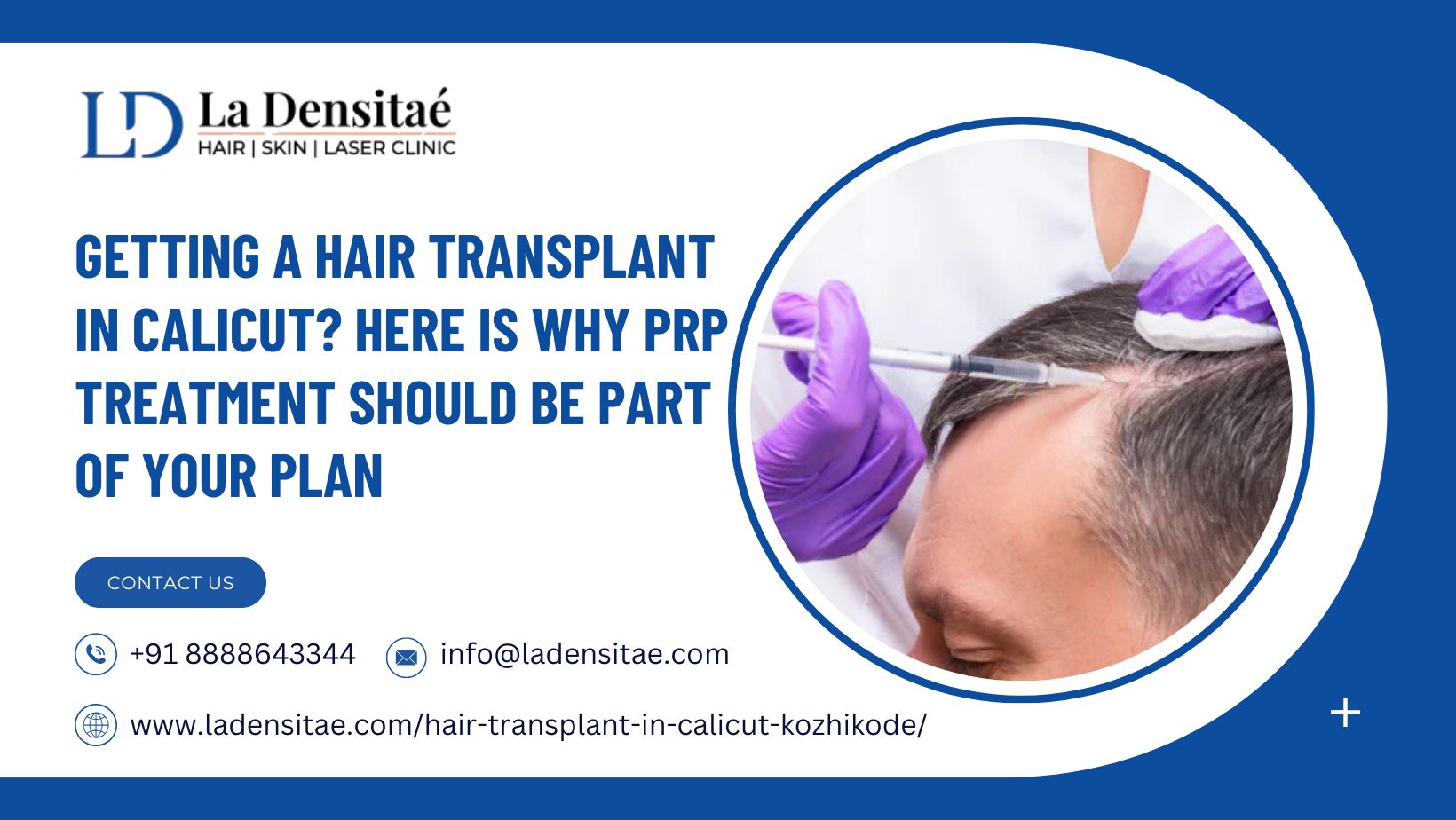 You have done your homework. You have looked through before and after photographs, read reviews, and compared options, and you have finally decided that a hair transplant is the right step for you. That is not a small decision, and reaching it usually takes real thought and a fair amount of research.
But here is something that often gets overlooked until later in the process. A hair transplant relocates healthy follicles from one part of your scalp to another. On its own, it does not guarantee that those follicles will grow at their absolute best, and it does little for the natural hair you still have that may be quietly thinning in the background.
This is exactly where PRP treatment comes in. If you are seriously considering a hair transplant in Calicut, this is one addition to your overall plan that deserves real attention before you move forward.
What a Hair Transplant Can and Cannot Do by Itself
A hair transplant works by taking follicles from a donor area, typically the back or sides of the scalp where hair tends to be more resistant to hormonal hair loss, and implanting them into areas where hair has thinned out or disappeared. With modern techniques such as FUE, results can look remarkably natural when the procedure is performed by an experienced surgeon.
The transplanted follicles are permanent in the sense that they continue growing in their new location, much as they would have in their original spot. This part of the process is well established and consistently reliable.
What a transplant does not directly control, though, is the overall health of your scalp environment. It does not stop the surrounding natural hair from continuing to thin if that hair is genetically predisposed to loss. And it does not guarantee that the newly placed grafts will recover as quickly or as fully as possible. These outcomes depend heavily on the supportive care your scalp receives during and after the procedure.
This is precisely the gap that PRP treatment for hair is designed to fill.
Understanding PRP Treatment in Simple Terms
PRP stands for Platelet Rich Plasma. It is a non-surgical therapy that uses a concentrated portion of your own blood to encourage hair follicles to become healthier and more active.
The process itself is straightforward. A small blood sample is drawn from your arm, much like a routine blood test. This sample is then placed into a centrifuge machine, which spins it at high speed to separate the blood into its different components. What gets isolated is the plasma layer that carries the highest concentration of platelets.
Platelets are rich in growth factors, which are proteins your body naturally uses to repair tissue and stimulate cell activity. When this concentrated plasma is injected into the scalp, those growth factors begin working directly on the hair follicles, improving blood flow, calming inflammation, and helping weak or dormant follicles become active again.
PRP hair treatment is widely regarded as very safe because it comes entirely from your own body. There is no risk of allergic reaction, no foreign substances involved, and the procedure itself is quick, minimally invasive, and requires no significant downtime.
Why PRP Makes So Much Sense Alongside Your Transplant
Consider everything your scalp goes through during a hair transplant procedure. Hundreds or even thousands of tiny incisions are made. Follicles are carefully extracted, handled, and implanted into new locations. The scalp then needs to heal properly and support these grafts as they establish themselves and begin growing.
That represents a significant amount of biological activity happening within a fairly short window of time. Giving your scalp the right support during this period can genuinely influence how your final results look.
PRP hair treatment in Calicut is increasingly recommended by hair restoration specialists for this very reason. When introduced during the weeks following a transplant, PRP helps reduce inflammation around the newly placed grafts, improves circulation to the treated area, and creates a more nourishing environment for those follicles to settle in and grow properly.
Beyond the transplanted zones, PRP also addresses something equally important, which is the hair surrounding the transplant area. Most patients undergoing a hair transplant in Calicut still have natural hair elsewhere on the scalp that is gradually thinning. Left unaddressed, this hair continues to weaken over time, which can eventually affect how full and balanced the overall result looks, even if the transplant procedure itself was technically successful. PRP works to actively strengthen these existing follicles and slow down further loss.
The combined effect of pairing a transplant with PRP is a scalp that heals faster, holds its results more effectively, and looks noticeably fuller and more natural over the long term.
Who Should Seriously Consider Adding PRP to Their Plan
While PRP offers benefits to nearly every transplant patient, certain situations make it especially valuable.
If you have a fairly extensive area of hair loss and are relying on a single transplant session to address most of it, PRP can help maximise your results by supporting both the transplanted area and the surrounding hair that the procedure does not directly touch.
If you have tried hair restoration before with only average results, or if your body tends to heal more slowly than average, PRP can give your scalp the additional support it needs to recover more effectively this time.
If you are a woman undergoing hair restoration, PRP often plays an even bigger role, since female hair loss tends to be spread more diffusely across the scalp rather than concentrated in specific patches. PRP works particularly well across these broader areas, complementing whatever transplanted zones may be involved.
And quite simply, if your goal is to get the best possible outcome from your investment in a hair transplant, PRP stands out as one of the most well-supported additions you can make to your overall treatment plan.
What Actually Happens During a PRP Session
For anyone who has never gone through PRP before, understanding the process tends to remove a lot of unnecessary nervousness. A typical session takes between 45 and 75 minutes from start to finish.
The doctor begins by drawing a small blood sample, usually around 15 to 20 ml, from your arm. This sample is processed in a centrifuge for several minutes until the platelet rich plasma is properly separated and concentrated. Before any injections begin, a numbing cream is applied to the scalp, which keeps the entire experience comfortable.
Once the plasma is ready, it is injected at carefully selected points across the treatment area using very fine needles. The number of injection points and the specific areas targeted depend on your individual hair loss pattern and overall treatment goals.
Mild redness or slight tenderness on the scalp afterward is completely normal and usually fades within a few hours. There is no significant downtime involved, and most patients return to their regular routine the very same day.
For transplant patients specifically, PRP is generally recommended starting two to four weeks after the procedure, once initial healing is well underway. Most patients go through three to four sessions spaced roughly a month apart, followed by maintenance sessions every few months to help sustain the long-term benefits.
Choosing the Right Hair Transplant Clinic in Calicut
The quality of your results, both from the transplant itself and from any PRP sessions added to the plan, depends heavily on where you choose to go. Not every clinic offers the same level of expertise or follows the same standards of care.
When evaluating a hair transplant clinic in Calicut, start by checking the qualifications and specific experience of the doctors involved. Hair restoration is a specialised field, and you want a team that regularly works with both surgical and non-surgical treatments, since this experience directly affects how effectively the two approaches are combined for your benefit.
Ask specifically about the equipment used for PRP, particularly the centrifuge system. Higher quality systems produce a cleaner, more concentrated plasma sample, which has a direct impact on how effective the overall treatment turns out to be.
Look closely at real patient results rather than relying solely on promotional photographs. Genuine before and after images, paired with honest reviews from previous patients, will tell you far more about a clinic’s actual capabilities than marketing material alone. A trustworthy clinic will also take the time to properly assess your scalp and hair loss pattern before recommending any treatment plan, rather than rushing you into a decision.
Understanding Hair Transplant Cost in Calicut
Cost is naturally a major part of this entire decision-making process. Hair transplant cost in Calicut depends on several factors, including the technique used, the number of grafts required, and the experience and reputation of the clinic you choose to go with.
PRP sessions are usually priced separately from the transplant procedure and are charged on a per-session basis. Adding PRP to your overall plan does increase your total investment, but for most patients, the improvement in results and the smoother recovery process make this an easy decision to justify in the long run.
Some clinics offer combined packages that bundle a set number of PRP sessions together with the transplant procedure at a more favourable rate. It is always worth asking about this option during your initial consultation, as it can make the financial side of your plan considerably more manageable.
Building a Complete Hair Restoration Plan
Hair treatment in Calicut has come a long way from the days when a transplant alone was viewed as a complete solution on its own. The most successful outcomes today come from a more thoughtful, comprehensive approach, one that supports the entire scalp rather than focusing narrowly on just the transplanted area.
PRP treatment for hair fits naturally into this bigger picture. It is not meant to replace a hair transplant, and it is not a standalone fix either. It is a well-supported companion treatment that works with your body to give your transplant the best possible chance of delivering results you will genuinely be happy with for years to come.
If you are planning a hair transplant in Calicut, do not treat PRP as an optional extra to think about later. Bring it into the conversation right from the beginning. Talk to your specialist, understand how it fits with your specific hair loss pattern, and build a plan that addresses your hair comprehensively rather than just partially.